
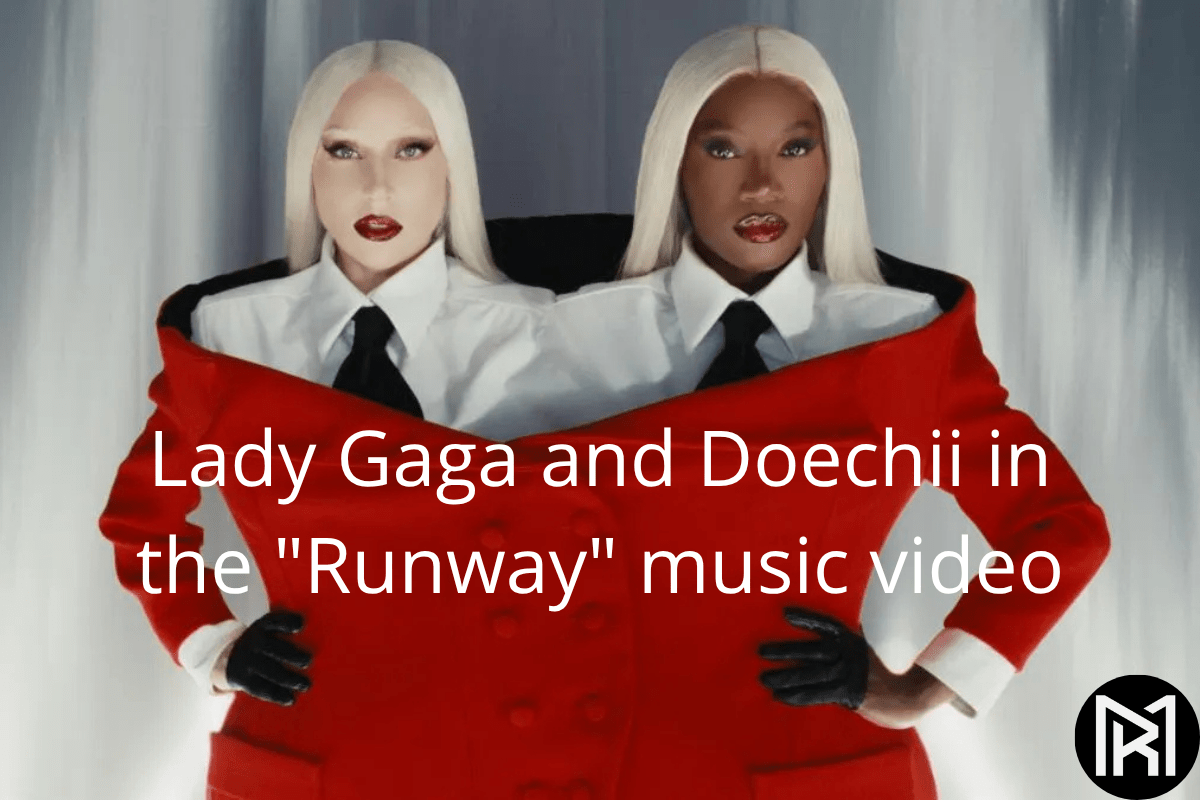
The “Runway” music video has arrived, and like other music videos released by Lady Gaga, this one has become an event. The track, linked to the universe of The Devil Wears Prada 2, has a different kind of impact. What could have been just a promotional ploy transforms into something more elaborate: a visual project that uses fashion as a language. Here, the catwalk is not just about aesthetics. It’s a space for affirmation, a territory where image, presence, and identity are constructed in real time.
Ballroom Culture as the Backbone
The video leans heavily into the energy of ballroom culture. Born within the Black and Latinx LGBTQ+ communities of New York, ballroom has always been more than performance. It was a space for survival, the creation of chosen families, and identity building in a system that historically excludes.
In “Runway,” the voguing does not appear as empty trends or recycled aesthetics. It carries presence. By sharing the screen with Doechii, Gaga incorporates these codes directly, without softening their origin. The runway is no longer about clothing. It is about who is allowed to occupy that space and under what conditions.
Fashion as Construction: Between Concept and Market
Visually, the video directed by Parris Goebel bets on excess and performative character. As highlighted by Vogue, the styling creates a clear dialogue between emerging designers and high-fashion houses. Gaga wears pieces like Daniel del Valle’s sculptural top known for turning everyday objects into wearable art alongside the structured creations of Robert Wun, and looks from Luar, Gaurav Gupta, and Bad Binch Tong Tong.
Doechii reinforces this proposal with pieces from Viktor & Rolf, Harris Reed, and Miss Claire Sullivan, expanding the spectrum between the experimental and the institutional. However, the most interesting point isn’t just the list of brands; it is the logic behind them. By mixing new talent with established houses, the video shows how fashion moves between artistic creation and a validation system. It is not just about wearing clothes; it is about positioning oneself.
The Body as Discourse and Life as Performance
The title “Runway” suggests fashion, but it functions almost as a provocation. In the video, the runway ceases to be a space for industry validation and becomes a territory for individual expression. This dialogues with the world of The Devil Wears Prada, but it expands the discussion. If, in the film, fashion is presented as a system of influence, here it is treated as a political language.
The body communicates, the image is constructed, and the performance is sustained. Gaga and Doechii are not just modeling looks. They are showing how, in many contexts, existing already demands a performance and how that performance can be both a choice and an imposition.
Runway
“Runway” does not just function as a music video or a movie extension. It serves as a synthesis. Fashion here is not just aesthetics or consumption. It is a tool for building identity, belonging, and visibility. Ultimately, what Gaga brings to the stage isn’t about who walks best. It is about who manages, despite everything, to keep being seen.