
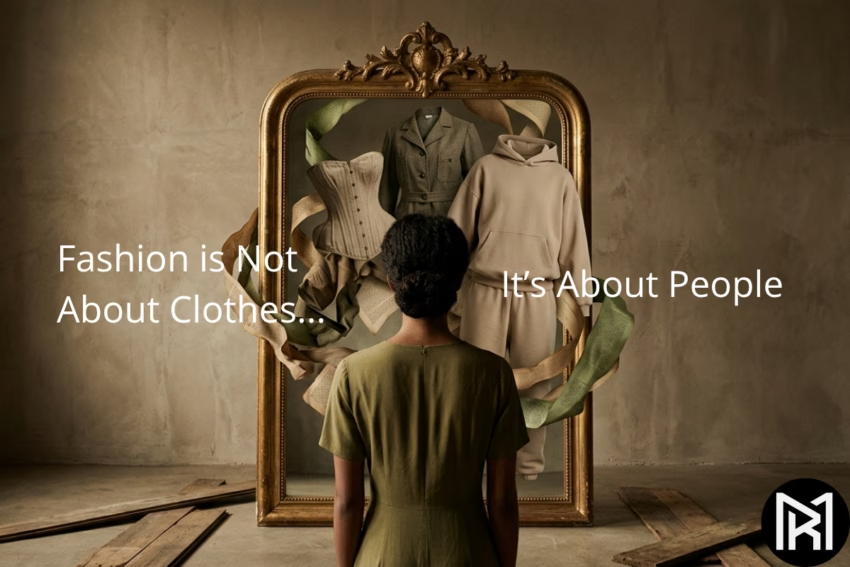
When people hear about fashion, they often limit their thoughts to the mirror. They think about what matches what, the “color of the moment,” or the shoe from the latest collection that will be discarded in six months. The reality is that reducing fashion to mere aesthetics is a tremendous historical ignorance.
Fashion goes far beyond textures. It is politics, it is art, and above all, it is the rawest expression of our social culture. Clothing is our first line of defense.
The Armor of Survival in Times of Crisis
History proves that our wardrobes change during wars, crises, and pandemics. Make no mistake: this is not just an adjustment to fabric shortages. Many times, fashion has served as a desperate mask to disguise malnutrition, skin diseases, and physical decay. Clothing was the armor for those who stayed in the cities while the rest of the world bled on battlefields. To dress was an act of psychological resistance.
If we look back at the Industrial Revolution, when women abandoned structured dresses and heavy volumes, they did so for survival. Practicality was an imposition of the machines and factory work. The female body was molded by the need to occupy spaces that were previously denied to them.
The Pandemic Uniform and the Weight of Trauma
What we experienced during the COVID-19 pandemic was just another chapter of this cycle. Sweatpants and athleisure did not gain popularity by chance; they were the official uniform of isolation. When the world closed down in lockdowns, high heels and glitter lost their meaning because there was no stage. There was no shine in a world where thousands of people were dying every day. Sneakers, once a performance accessory, became the symbol of our new boundaries: trips to the supermarket and short, permitted walks.
For those who thought the post-pandemic era would be an immediate “return to glamour,” I must warn you: fashion does not change with a flip of a switch. It follows the slow pace of social thought. The comfort we prioritize today is the residue of a trauma we are still processing.
Beyond Fabric: Art as a Historical Record
Nothing is done by chance. Every seam is thought, rethought, and analyzed to follow the daily movement of the masses. On the other hand, fashion is also our vehicle for indignation. It is the most direct means of communication to express our disgust with excess, industrial environmental crimes, and social inequalities.
If fashion is part of art, it represents the spirit of a people—whether through their achievements and status or their challenges and scars. Fabrics adapt to the climate, prices, and market supply because everyday clothing must be useful before it is beautiful. Nothing is built for a single day; clothing crosses seasons and carries the weight of the time in which it was created.
The Human Connection
In the end, fashion is the most visible record of our collective history. To ignore its political weight is to ignore the human journey itself. Fashion, music, cinema, literature… art in general is how human beings demonstrate what they feel. It leaves a record for history books of what society lived through, endured, and survived.